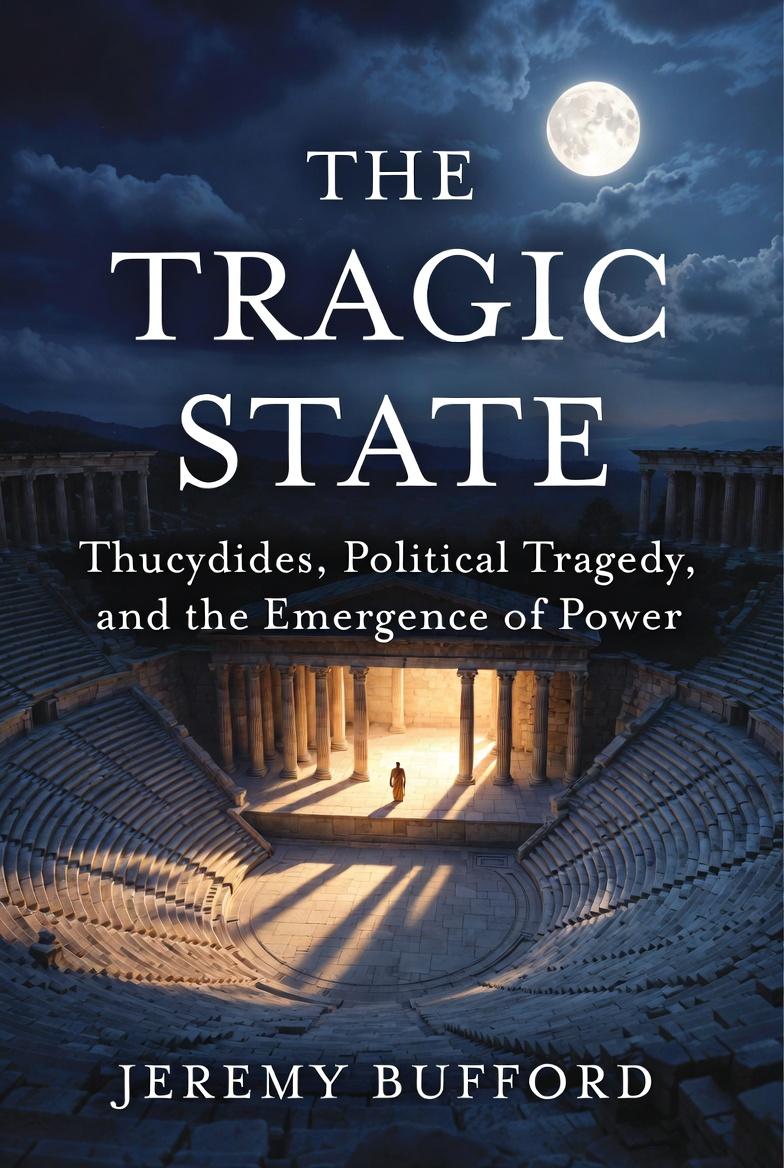
The Tragic StateAvailable now
Official link • Secure checkout on Amazon

About this book
The State as Tragic Protagonist: Thucydides and the Emergence of Political Tragedy
In the winter of 415 BCE, the Athenian assembly voted to launch the largest expedition in Greek history—an armada of more than one hundred ships and thousands of hoplites bound for Sicily. The decision was not the calculated strategy of a single statesman but the collective product of democratic debate, personal ambition, popular hope, and institutional momentum. Within two years, the expedition ended in catastrophic defeat: the Athenian forces were annihilated, their generals executed or enslaved, and the city’s naval supremacy shattered. Thucydides, who lived through these events, presents the Sicilian disaster not merely as a military failure but as the decisive reversal in a larger drama. The protagonist of that drama is not Alcibiades, Nicias, or any other individual, but Athens itself—the polis that had risen from the ashes of the Persian Wars to become the greatest power in the Greek world, only to destroy itself through the very qualities that had made it great.
This book argues that Thucydides’ History of the Peloponnesian War is the foundational text of political tragedy. By “political tragedy” I mean a narrative and analytical framework in which a collective political actor—the state—pursues power and glory according to the imperatives of its regime type, reaches a peak of achievement, and then suffers a reversal brought about by the internal contradictions of its own success. The reversal is not the result of divine nemesis or individual moral failing alone, but an emergent property of the interaction between constant human nature and specific institutional conditions: democratic decision-making, expansive imperial or liberal aspirations, and insufficient restraints on ambition and short-term passions. The story is “never-ending” because these conditions recur across history, producing similar trajectories in regimes as different as classical Athens, republican Rome, and modern liberal democracies.
Thucydides himself supplies the warrant for this reading. In one of the most famous methodological statements in Western historiography, he declares that he will be content if his work proves useful to those who wish to understand “the events which happened in the past and which (human nature being what it is) will, at some time or other and in much the same ways, be repeated in the future”. Human nature is constant, but it manifests differently according to the political forms through which it is channeled. The History is therefore not a chronicle of individual heroes and villains but a study of how the Athenian polis, as a collective entity with agency, generated its own tragic fate.