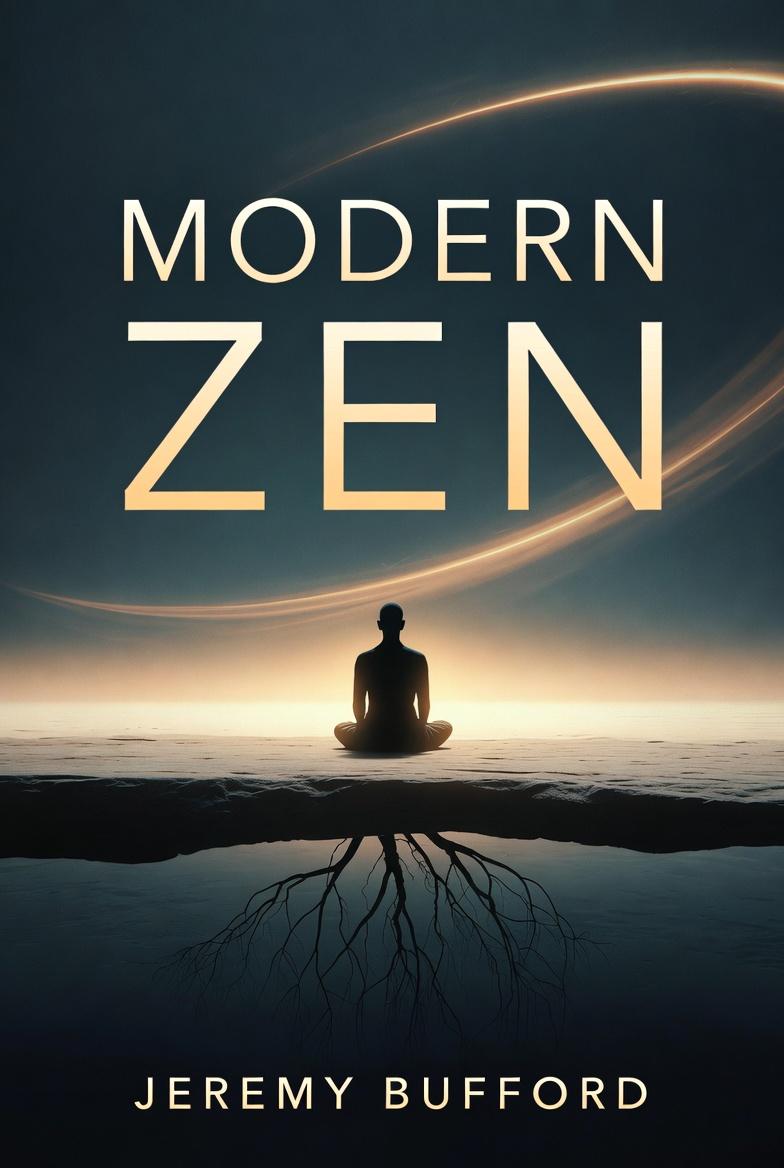
Modern ZenAvailable now
Official link • Secure checkout on Amazon

About this book
It was a crisp September 2025 morning in the gardens below the Eiffel Tower. I sat on a weathered wooden bench, a fresh cappuccino warming my hands, watching tourists and Parisians move in their easy rhythm — some snapping photos of the great iron lattice, others lost in quiet conversation, children chasing pigeons across the gravel. The tower itself looked almost delicate against the pale blue sky, a reminder that even the most solid things we build can feel suddenly temporary.
Then my phone buzzed against my leg, and the illusion shattered. Another cascade of notifications: fresh headlines about AI and robotics, urgent warnings about the economy, dark clouds of war forming in distant countries. Each alert carried the same undertone — an acceleration so relentless it felt personal, as if the ground beneath every bench on earth were quietly tilting. The tsunami wasn’t coming; it was already here, lapping at the edges of ordinary mornings.
That feeling was not new to me. In my twenties I had first heard Alan Watts’ voice crackling through cheap headphones, laughing at the very idea that we could ever be separate from the swirling chaos around us. Overwhelmed one ordinary afternoon, I remembered the simplest thing he described: just sitting. No technique, no goal, only the raw immediacy of breath moving in and out. In those first few minutes the storm of thoughts did not vanish, but something shifted — I stopped drowning inside it. That single taste of unshakable calm became the seed of everything that followed.
This book exists because the chaos has never arrived at this speed or from so many directions at once. Artificial intelligence reshaping entire industries overnight, economies swinging like pendulums in the hands of algorithms, conflict flickering across every screen. These are not distant headlines anymore. They are the air we breathe. Old answers, no matter how wise, were forged for slower days. Even the gentlest mindfulness apps often feel like polite wallpaper over the cracks.